The Travel Rule for stablecoins: what MSBs actually need to implement
FATF Recommendation 16 applies to stablecoin transfers like wires. The originator and beneficiary data to attach, and the thresholds.
- The Travel Rule applies to Virtual Asset Service Providers, including most stablecoin remittance flows.
- You must transmit originator and beneficiary data alongside the value transfer — not after it.
- Messaging-layer infrastructure lets you attach Travel Rule data to every transfer without rebuilding your stack.
When a money service business starts moving value in stablecoins, the most common compliance misconception is that the rules change. They do not. FATF Recommendation 16 — the "Travel Rule" — applies to virtual asset transfers in substantially the same way it applies to traditional wire transfers. If you are a Virtual Asset Service Provider (VASP), you are expected to collect, verify and transmit specific information about both the originator and the beneficiary of a transfer.
What data has to travel with the transfer
For transfers above the applicable de-minimis threshold (USD/EUR 1,000 in most FATF-aligned jurisdictions), the originating institution must obtain and transmit the following alongside the value movement:
- Originator name
- Originator account number or wallet identifier used to process the transaction
- Originator physical address, national identity number, or date and place of birth
- Beneficiary name
- Beneficiary account number or wallet identifier
The critical word is "alongside." Regulators expect the required data to accompany the transfer, immediately and securely — not to be reconstructed afterwards from blockchain forensics. This is precisely the gap that on-chain settlement leaves open: the blockchain confirms that value moved, but it carries none of the counterparty context an examiner needs.
Why this breaks naive stablecoin setups
A business that simply holds wallets and sends USDC has no standard channel to transmit Travel Rule data to the receiving institution. Bolting on a screening vendor after the fact does not solve it either, because the obligation is to transmit counterparty data with the transfer, between obliged entities. Without a messaging layer, every corridor becomes a bespoke integration.
The blockchain proves the money moved. It does not prove you knew who was on both ends — and that is the part your examiner cares about.
How to operationalise it
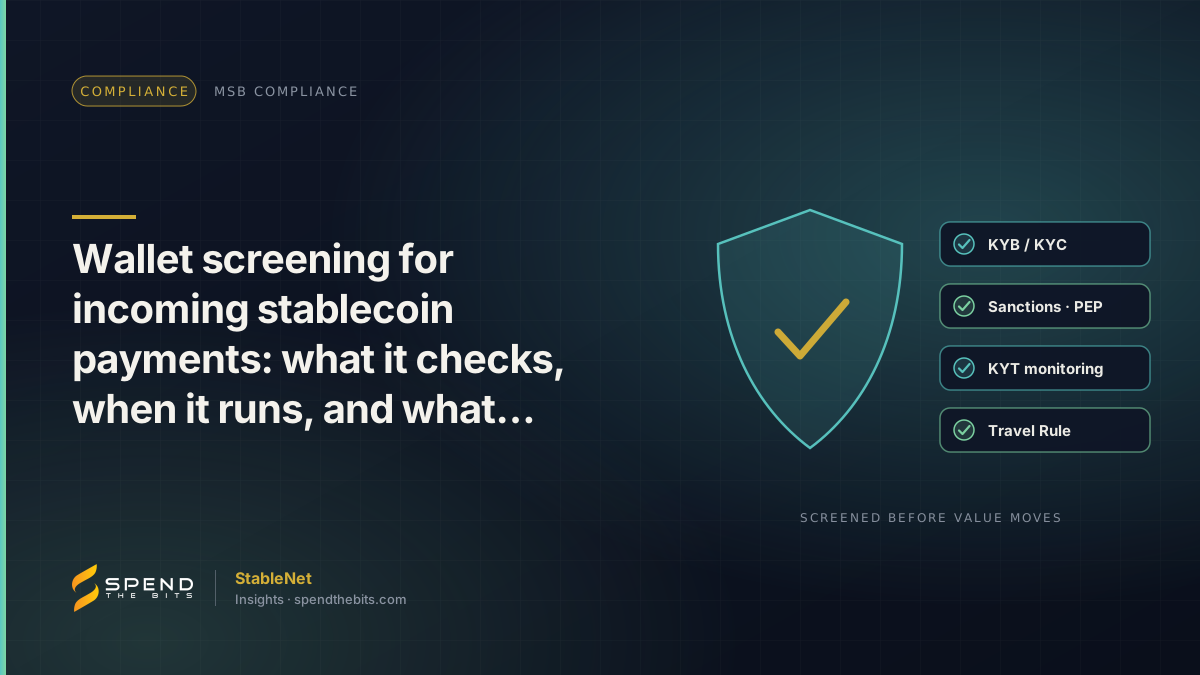
The practical answer is to treat compliance as a messaging problem, not a custody problem. A financial-messaging layer that sits over your settlement rails can attach structured originator/beneficiary data to every transfer, screen both parties against sanctions and PEP lists in real time, and write an immutable audit record — all before settlement is released.
- Capture verified KYC/KYB data once at onboarding, then reference it per transaction.
- Attach Travel Rule fields to every message above threshold automatically.
- Screen originator and beneficiary against sanctions, PEP and adverse-media lists in-flight.
- Log every decision to an examiner-ready, immutable audit trail.
Done this way, the Travel Rule stops being a blocker on stablecoin adoption and becomes a routine, automated step. StableNet was built around exactly this model — Travel Rule data and KYT screening are part of the message, not an afterthought.
See it on your corridors
Book a working session and we’ll map StableNet’s compliance and settlement to one of your live payment flows.